01
CoordinationCoordination is the biggest pain point.
Users spend more time scheduling pickups than searching for items.
Self-directed UX case study
Making furniture exchange simple, local and reliable.
A self-directed UX case study exploring how structured pickup coordination can reduce friction, increase trust and improve furniture exchanges between neighbors.
This project validates a product concept through research and prototyping rather than implementation.
Existing platforms create unnecessary friction through endless messaging, unclear availability, unreliable users and frequent no-shows.
This leads to wasted time, frustration and abandoned exchanges — even when both people genuinely want the swap to happen.
Semi-structured interviews with Copenhagen locals and expats who had recently exchanged furniture — mapping the real process and where it breaks down.
5
Participants — locals & expats
30–45
Minutes per interview
CPH
Copenhagen area
01
CoordinationUsers spend more time scheduling pickups than searching for items.
02
TrustPeople need lightweight signals before agreeing to meet in person.
03
ReliabilityNo-shows and cancellations create lasting frustration.
04
SimplicityClear next steps matter more than rich functionality.
From interviews to insights
Five semi-structured interviews were conducted with people who regularly use Facebook Marketplace, DBA and local exchange groups. Findings were synthesized into recurring themes around trust, coordination and pickup reliability.
The goal is not to present exhaustive research documentation, but to demonstrate how findings informed design decisions.
5 User Interviews
Semi-structured, 30–45 min.
Theme Clustering
Affinity mapping of quotes.
Behavior Patterns
Recurring coordination friction.
Design Opportunities
Translated into HMW prompts.
Their motivations differ — speed vs. community — but both experience the same core breakdown around pickup coordination.

The Expat Urban Sharer · Copenhagen
Argentinian event producer living alone in Copenhagen. Rearranges his space often and gives away furniture through community platforms.
Goals
Pain points
Key behavioral insights

The Local Community Giver · Frederiksberg
Government employee in Frederiksberg, married with two teenagers. Regularly gives away items to support reuse and reduce waste.
Goals
Pain points
Key behavioral insights
How might we help neighbors coordinate furniture exchanges with less messaging, fewer no-shows and more trust?
Design principles
01
Replace open-ended chat with structured scheduling.
02
Make commitments explicit, visible and binding.
03
Confirmed windows instead of vague meet-ups.
04
Surface lightweight signals before strangers meet.
The redesigned flow replaces chat-based negotiation with a single guided sequence — each step is explicit, confirmable and traceable.
Discover Item
Review Listing
Choose Pickup Time
Confirm Exchange
Complete Pickup
Leave Feedback
Discovery and listings stay familiar — but scheduling, confirmation and feedback are pulled into the product itself, removing the messaging gap where most exchanges fall apart.
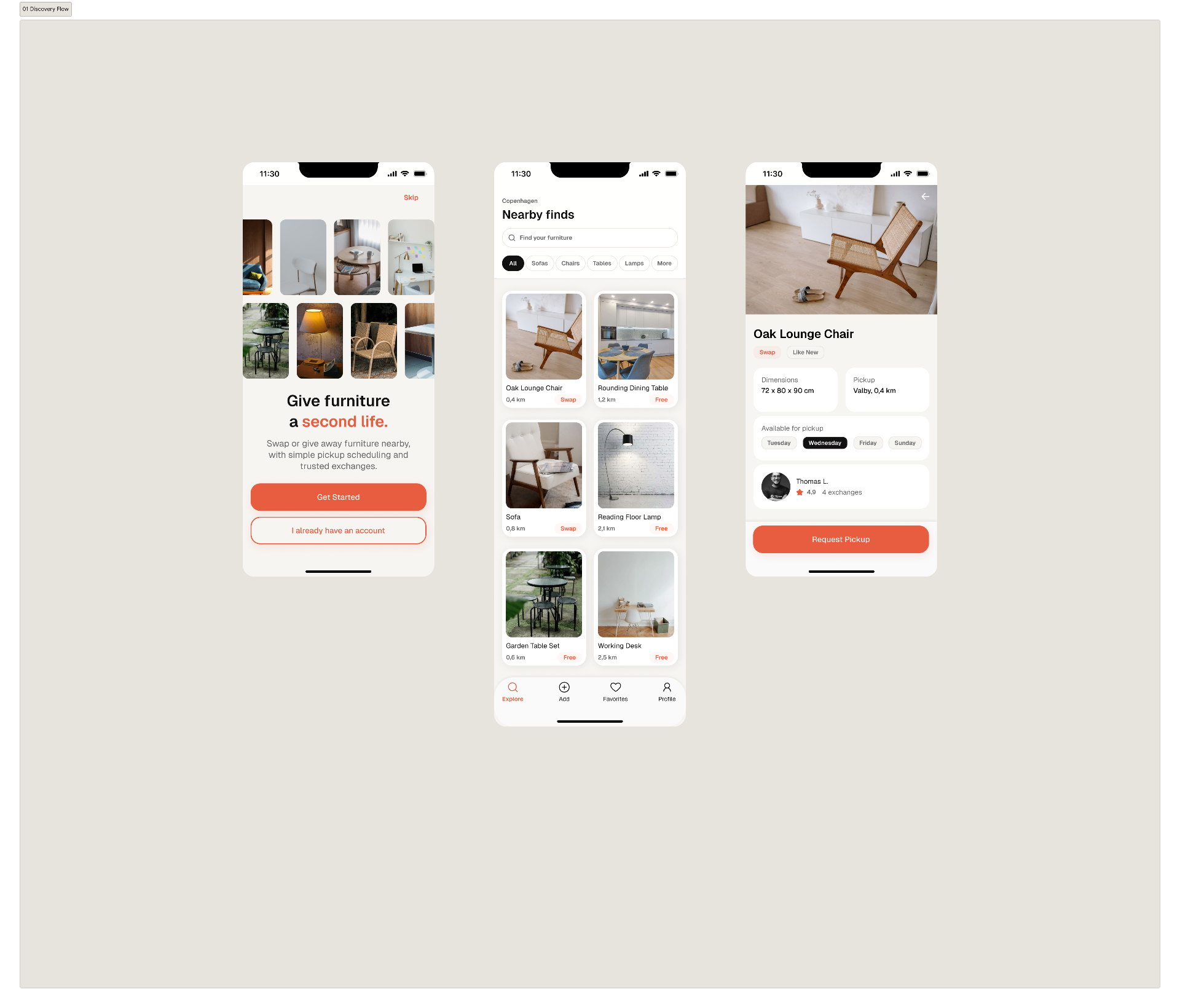
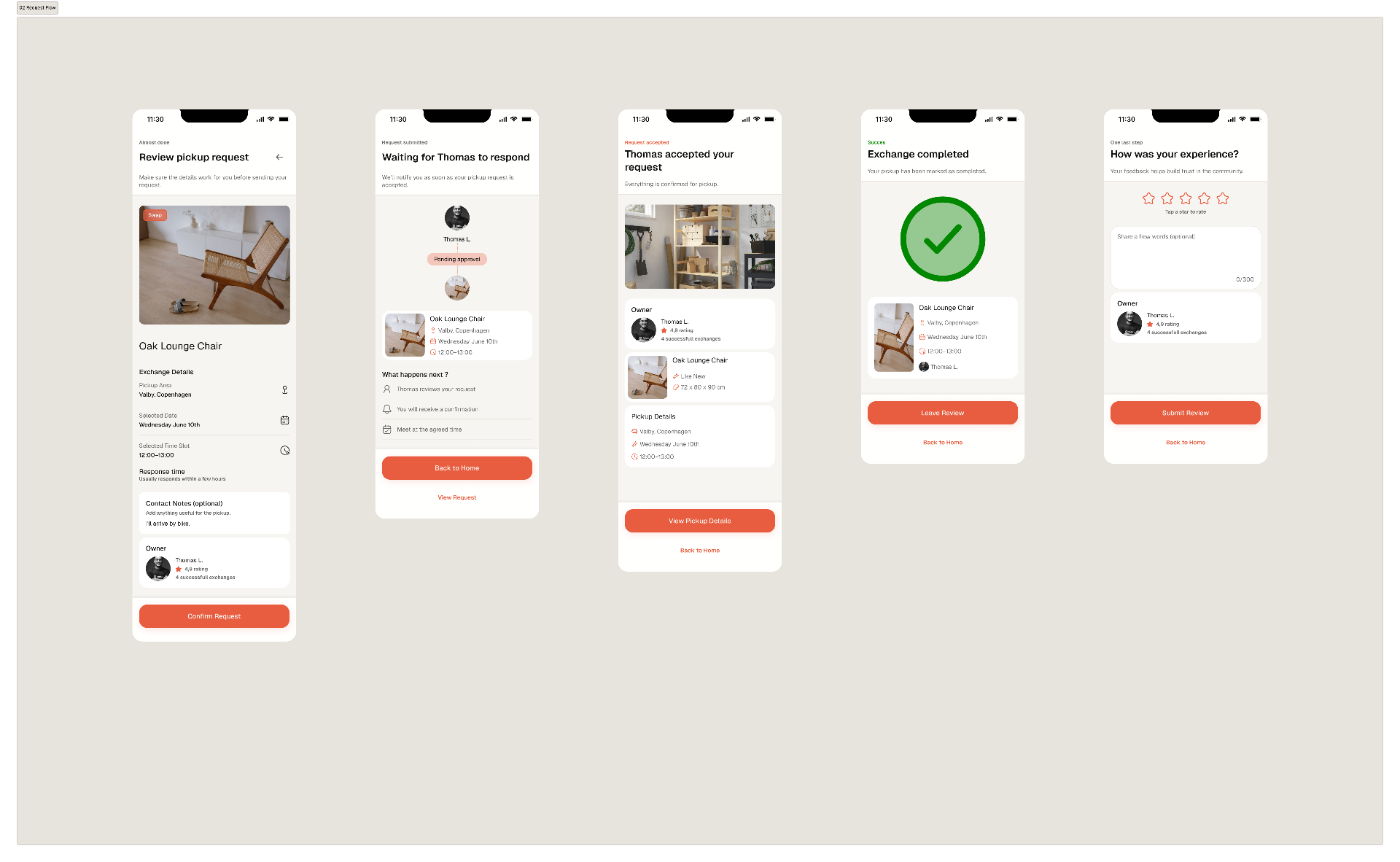
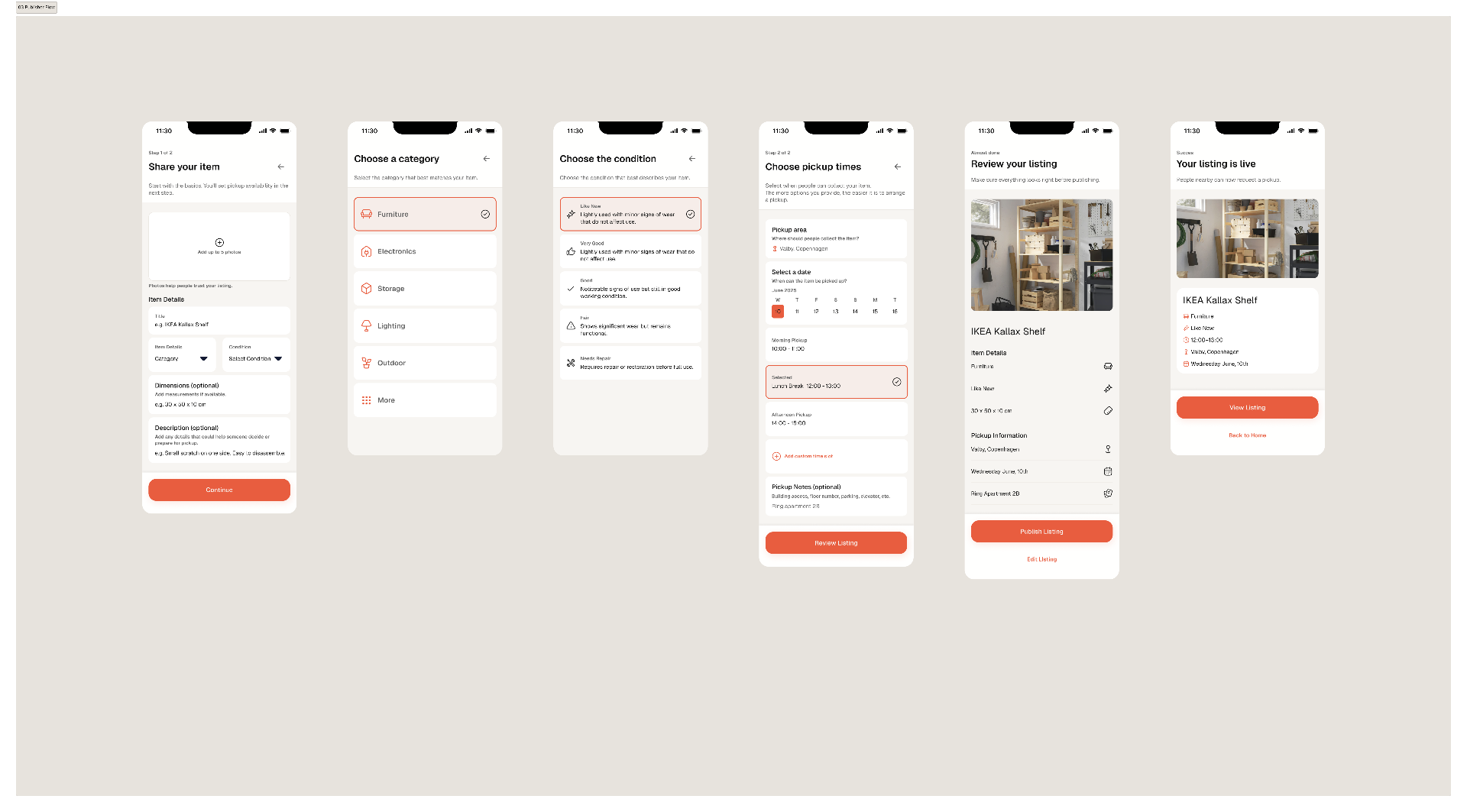
The solution focuses on structured pickup coordination rather than traditional chat-based negotiation. Three core flows support the experience.
Users can quickly discover nearby furniture and evaluate listings before initiating an exchange.
Structured pickup scheduling reduces uncertainty and creates accountability between both participants.
Creating a listing takes only a few steps while ensuring enough information for a successful exchange.
A focused selection of screens — discovery, decision, and confirmation — the touchpoints where coordination effort is replaced by confidence.
Explore the complete end-to-end experience including discovery, publishing and pickup coordination flows.
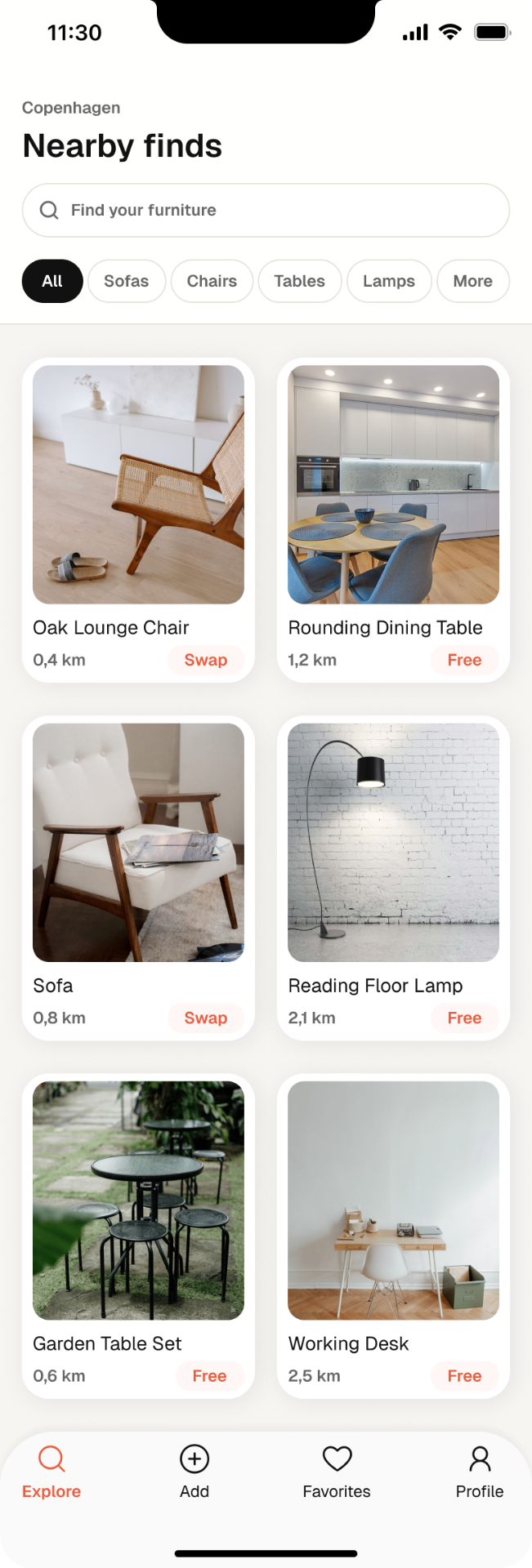
02 — Home
Helping users discover relevant items nearby.
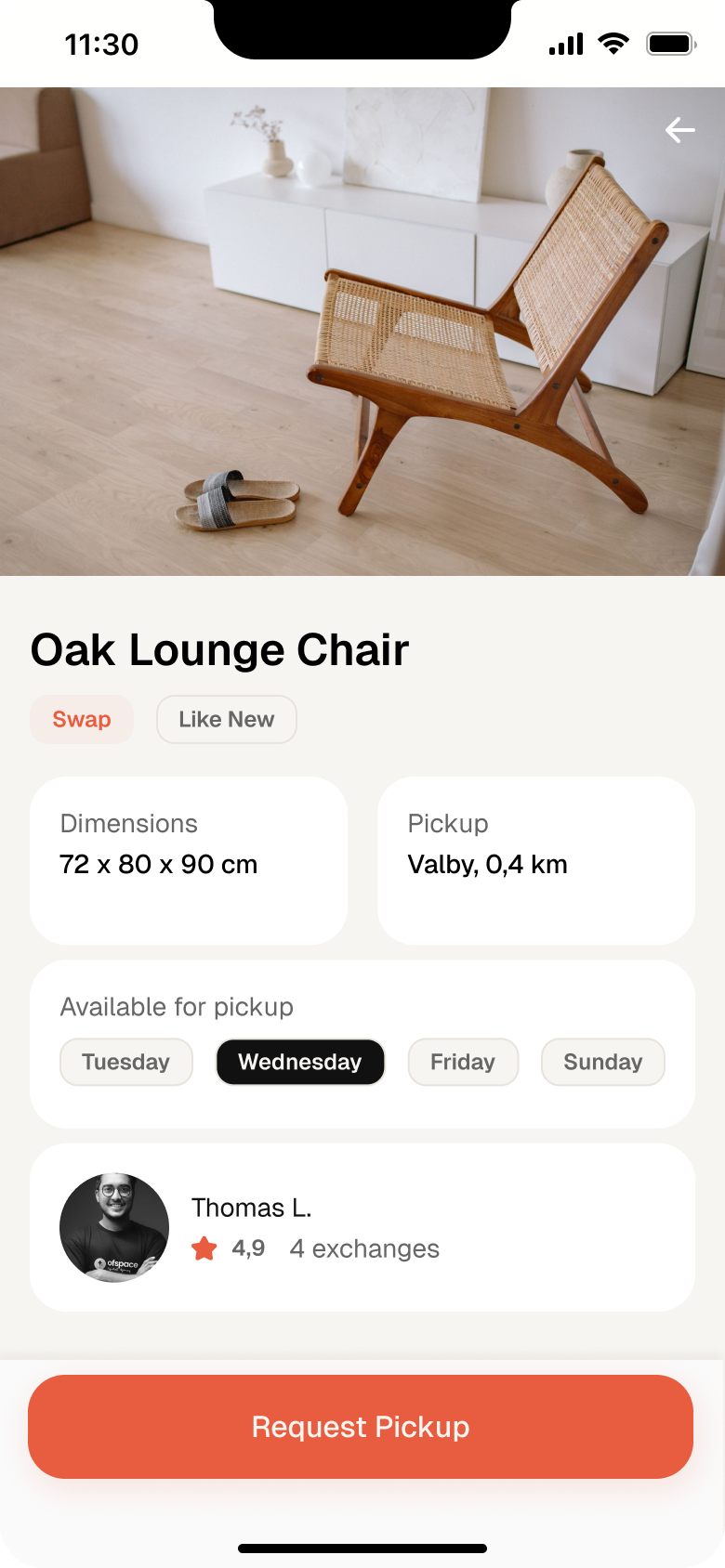
03 — Listing Detail
Providing clear information before requesting pickup.
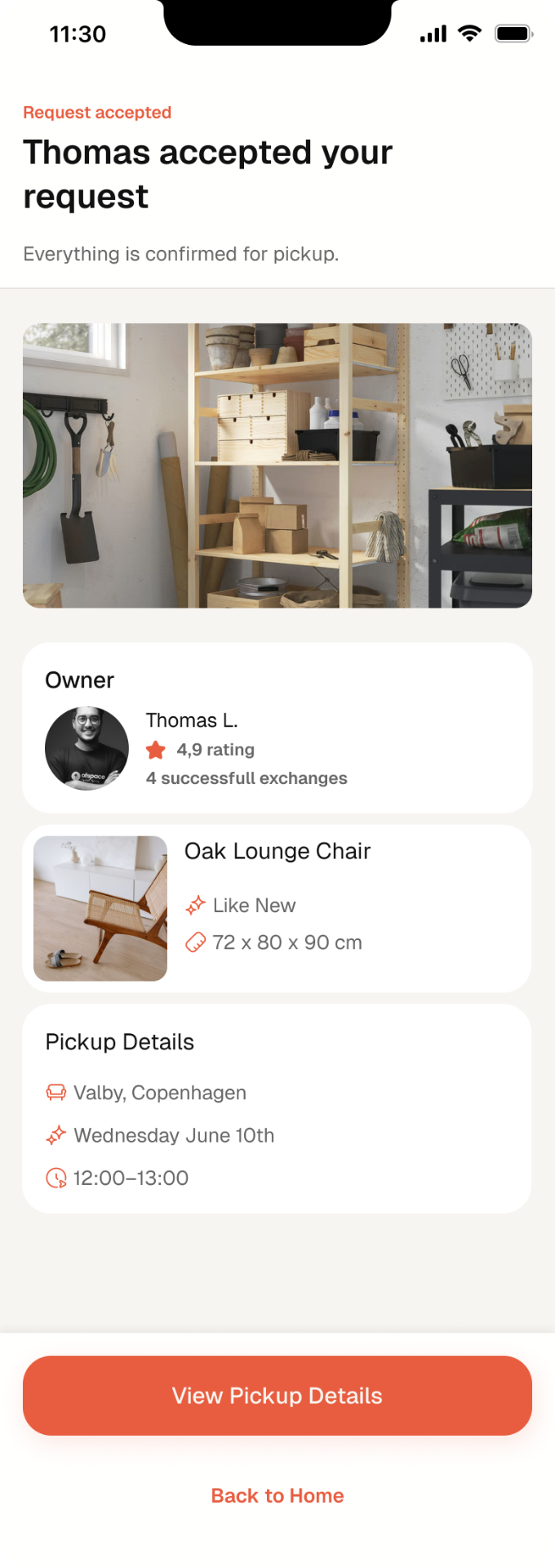
06 — Request Accepted
Confirming exchanges and increasing trust.
Because this concept was not released to production, no real-world metrics were collected. The outcomes below represent the intended behavioral improvements the solution was designed to create.
Less effort
Structured pickup slots reduce the need for repetitive scheduling conversations.
More reliable
Clear commitments and reminders help reduce uncertainty and no-shows.
More trust
Profiles, ratings and confirmed exchanges provide stronger trust signals.
If this concept moved into validation, these would be the next hypotheses to test.
01
Would additional accountability mechanisms further reduce no-shows?
02
Can reminder timing improve attendance and completion rates?
03
Which trust signals have the greatest impact on pickup confidence?
04
Can availability syncing reduce coordination effort even further?
The biggest insight from this project was that the core problem wasn't discovering furniture. It was coordinating people.
Users already have access to multiple marketplaces with thousands of listings. The frustration appears later, when two strangers need to agree on a pickup and follow through.
This shifted the design focus away from search and browsing features and toward service design, scheduling and trust-building mechanisms.
If I continued the project, I would validate whether structured scheduling alone is enough to reduce no-shows, or whether stronger commitment systems would be required.
The project reinforced the importance of identifying the real problem before designing the solution.
Explore the prototype
View interactive prototypeExplore additional UX, product design and web design work.